


June 12, 2026
When people think about elevator design, they often focus on wall panels, finishes, or mirrors. But in today’s elevator interiors, lighting has become the single most influential design element. The right elevator lighting design can make a cab feel larger, brighter, safer, and more refined, while poor lighting can make even the most expensive materials fall flat.
Modern elevator interiors are no longer lit as an afterthought. Instead, lighting is being used strategically to shape mood, highlight craftsmanship, and enhance the overall passenger experience.
Elevators are small, enclosed spaces where passengers stand just inches from walls, ceilings, and fixtures. Because of this close-up viewing, lighting dramatically shapes how passengers perceive materials, colors, and textures.
Dark or uneven lighting can make a cab feel cramped and uncomfortable. Bright, well distributed light reduces shadows, improves visibility, and creates a more welcoming environment. According to industry lighting experts, quality lighting doesn’t just illuminate an elevator, it sets the mood and elevates the entire experience.
Older elevator lighting systems often relied on halogen fixtures with narrow beam spreads. These lights produced harsh shadows, generated excess heat, and delivered inconsistent illumination.
Modern elevator interiors have largely transitioned to LED lighting systems, which offer several advantages:
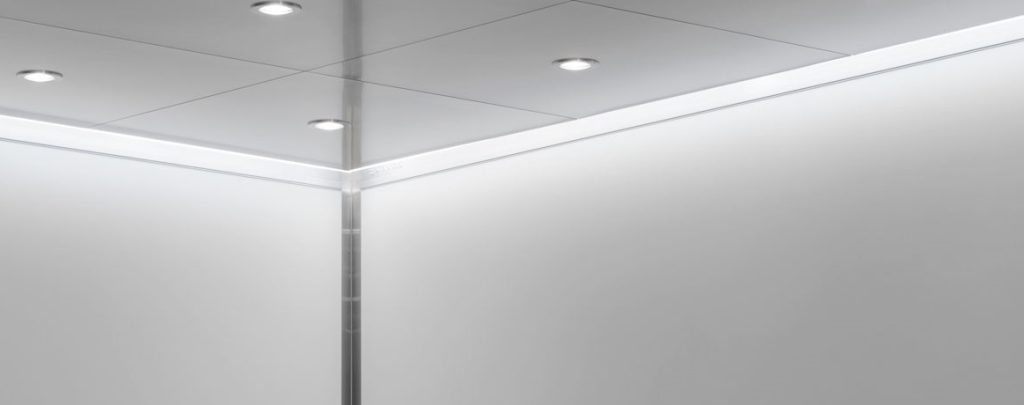
Warm white is the elevator industry standard, though cool white may be selected to complement the overall design of your specific building. LED downlights and linear lighting systems fill the cab with light, helping both vertical and horizontal designs feel more spacious and balanced.
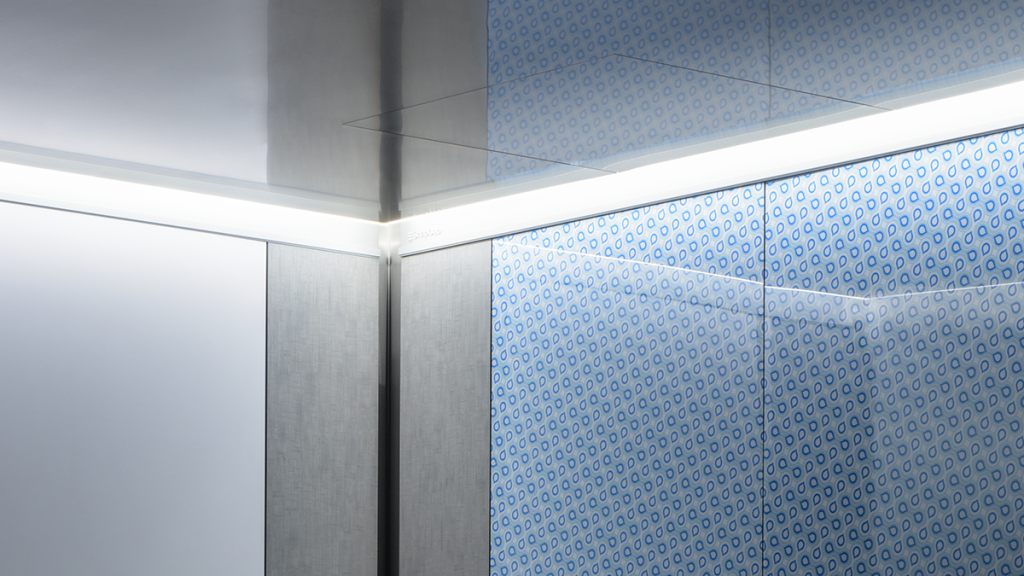
One of the most noticeable trends in elevator interior design is the rise of perimeter lighting.
Rather than focusing light straight down, perimeter lighting casts a soft glow along the walls, visually emphasizing the full width and height of the cab. This “wall washing” effect adds depth and highlights wall panel finishes without overwhelming the space. While perimeter lighting provides ample illumination around the interior, some elevator designs also incorporate a single downlight at the center of the cab ceiling to deliver focused lighting to the center of the space.
Perimeter lighting is available as:
This approach is especially effective in modern and contemporary elevator interiors; where clean lines and layered materials benefit from subtle, indirect illumination.
Modern elevator lighting is closely tied to ceiling design. Some of today’s most popular ceiling styles include:
The Aurora Ceiling pairs beautifully with perimeter lighting because it features a seamless, undivided design that allows the light to flow continuously around the cab. This design draws attention to wall panels while minimizing glare and harsh shadows. It’s especially popular in passenger elevators where comfort and atmosphere are priorities.
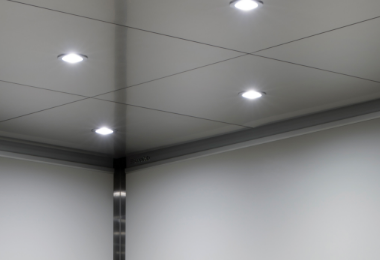
The Island Ceiling features a segmented design with LED downlights positioned at the center of each section—typically 9 downlights in larger elevators and 6 in smaller cabs. This approach delivers bright, even illumination. Perimeter lighting can be added as an optional enhancement to modernize the look and elevate the visual effect.
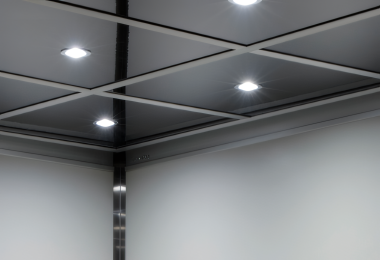
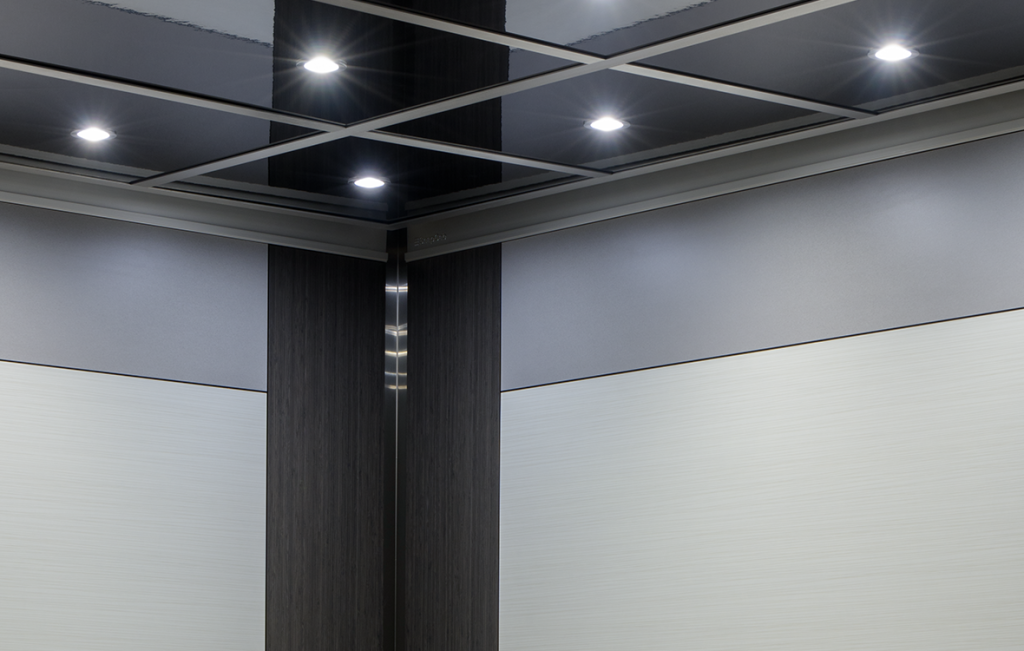
For a more dramatic aesthetic, the Modular Ceiling pairs LED downlights with glossy laminate finishes. The result is a bold, contemporary ceiling that can create an expansive, almost “night sky” effect in the cab, thanks in part to the reflective properties of the black finish.
Lighting and color choices are inseparable in elevator design. Light colors, especially on upper wall panels, reflect illumination more effectively, making the cab feel larger and more open. Darker finishes absorb light, so designers should use them strategically below the handrail or as accents.
Design best practices typically recommend:
Because materials can look dramatically different depending on lighting direction and intensity, architects must always consider lighting early in the design process.
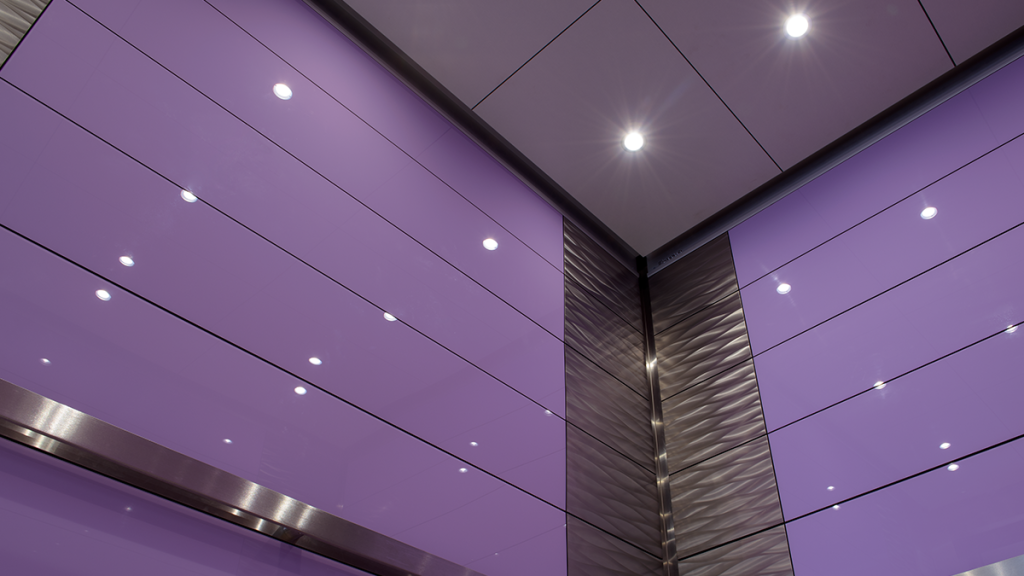
Not every elevator serves the same purpose, and lighting choices should reflect how the space is used.
Matching lighting design to the building environment ensures both compliance and comfort.
Beyond aesthetics, elevator lighting must meet strict safety and code requirements. Furthermore, modern LED systems designed specifically for the elevator industry integrate seamlessly with the elevator’s emergency battery backup systems, ensuring reliable illumination during power loss and code compliance across all conditions. To protect the system, manufacturers recess or guard the fixtures to prevent damage and ensure long-term reliability.
Thoughtful lighting design ensures that passengers can clearly see floors, buttons, and surroundings, an essential component of a safe elevator environment.
Today’s elevator interiors prove that lighting isn’t just functional, it’s foundational. From perimeter glow to high-performance LED downlights, modern lighting strategies transform how elevators look, feel, and perform.
Ultimately, when lighting is done right, it enhances every material choice and elevates the entire interior.