Book a Design Session

Victoria Lopes

Custom vs. Standard Elevator Interiors: Which SnapCab Solution Fits Your Project Best?

Bostock Custom Cab vs SnapCab Standard Cab

Discover SnapCab’s custom and standard elevator interior solutions. Our Design Sessions offer solutions that fit your project and budget.

Custom vs. Standard Elevator Interiors: Which SnapCab Solution Fits Your Project Best?

Discover SnapCab’s custom and standard elevator interior solutions. Our Design Sessions offer solutions that fit your project and budget.

March 11, 2026
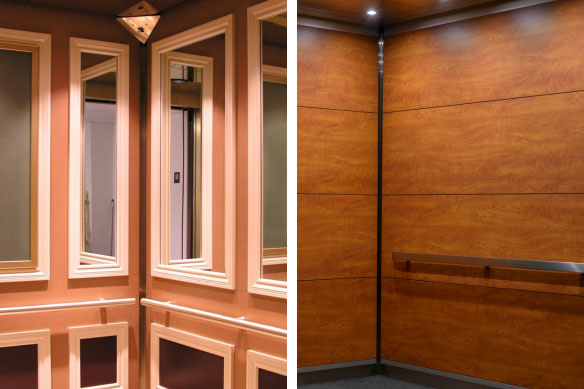
Bostock Custom Cab vs SnapCab Standard Cab

Designing or upgrading an elevator cab interior is more than a functional decision; it’s a statement about your building’s identity. Whether you’re a facility manager, architect, or building owner, choosing between SnapCab’s Standard and Bostock Custom interiors can feel daunting. How do you balance aesthetics, durability, budget, and code compliance? Thankfully, SnapCab’s free Design Sessions are an excellent guide in understanding the design of elevator interiors. This article explores both interior options through a customer-centric lens, highlighting how SnapCab’s collaborative process delivers engineered solutions tailored to your needs.

Why Elevator Interiors Matter

When stepping into a building, the elevator is often the first enclosed space a visitor experiences. It sets the tone for the rest of the journey — whether it’s a luxury hotel, a corporate office, or a residential high-rise. The elevator cab interior is more than just a box that moves people; it’s a reflection of the building’s identity, values, and attention to detail. That’s why choosing between a standard and custom elevator interior is a decision that deserves thoughtful consideration.

SnapCab understands that every building has a story to tell. Regardless of whether you’re working on a modernization project or a new build, the elevator cab should align with your design goals, budget, and functional needs. Because of this, our standard and custom options are designed to meet a wide range of requirements, offering flexibility without compromising quality.

SnapCab Standard Elevator Interiors: Reliable, Fast, and Budget-Friendly
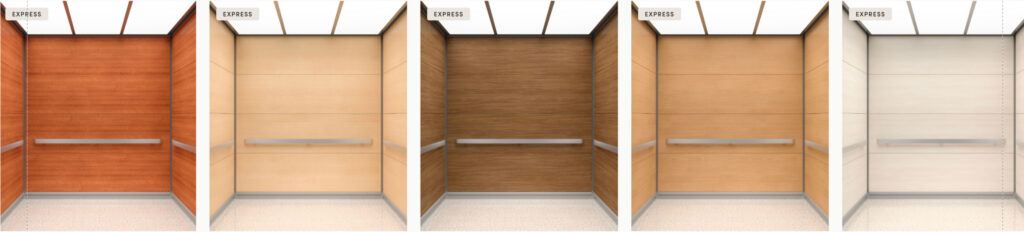
Let SnapCab be your Elevator Interior Design Guide by showing you our selection of elevator interior models.

SnapCab’s Standard Elevator Interiors are ideal for projects that require a quick turnaround, cost efficiency, and proven durability. These pre-designed models — such as Classic I, Contemporary II, and Modern I — offer a streamlined solution without sacrificing quality or style.

Key Benefits of Standard Interiors:

  • Hundreds of laminate finishes to match any building aesthetic
  • All interiors include a durable 2″ flat satin stainless steel handrail with customization options
  • Industry-leading 3-year warranty for peace of mind
  • Quick Turnaround: Standard options are ideal for projects with tight timelines.
  • Design Sessions: Personalized design support that reviews materials options and other needs with our cab interior specialists
  • Express Models: Models that are designed for speed and simplicity. Easy to order and delivered fast. Clients might choose their preferred laminate color, and the cab will arrive within four weeks.

Standard interiors are perfect for modernization projects, budget-conscious upgrades, or buildings with multiple elevators requiring uniformity. Clients can select finishes and layouts during a SnapCab Design Session, ensuring the final product meets both functional and aesthetic goals. 

Bostock Custom Interiors: Tailored Elegance with Unlimited Possibilities
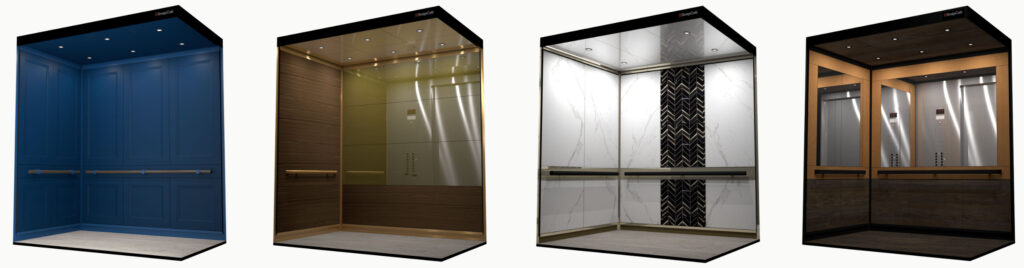
Bostock Custom Cabs

For clients seeking a truly unique elevator cab interior, SnapCab’s Bostock Custom line offers complete design freedom. From premium materials to bespoke layouts, every element is customizable to reflect the building’s brand, purpose, and personality.

  • Key Features of Bostock Custom Interiors:
  • Material options include wood veneer, glass, textured metals, leather, fabric, resin, and 3Form
  • Advanced design elements like metal mesh, engraving, perforations, and image printing
  • Integrated backlit panels and TV displays for ambiance and functionality
  • Custom panel configurations for unique layouts
  • Code-compliant designs with upfront guidance on regulatory challenges
  • Sustainable materials and practices for eco-conscious projects
  • Legacy craftsmanship backed by SnapCab’s history since 1983
  • Design Sessions with our custom interior specialists are also available for the Bostock Custom clients.

Bostock Custom is ideal for high-profile buildings, luxury developments, or projects where design integrity is of paramount importance. Clients can collaborate with SnapCab’s Interior Specialists to bring their vision to life, balancing creativity with compliance and performance.

Designing for Durability and Aesthetics

Elevator interiors endure significant wear and tear. From rolling carts and luggage to daily foot traffic, the materials used must be resilient. Knowing this, SnapCab has engineered it’s standard cabs with high-traffic environments in mind. Laminates are scratch-resistant, handrails are built for safety and durability, and the overall construction is designed for longevity.

Custom interiors, on the other hand, allow for elevated design without sacrificing performance. Clients can choose from materials like textured metals, glass, and wood veneer—all tested for durability. Our design team ensures that even the most luxurious finishes meet code compliance and performance standards.

SnapCab Design Sessions: Your Vision, Engineered
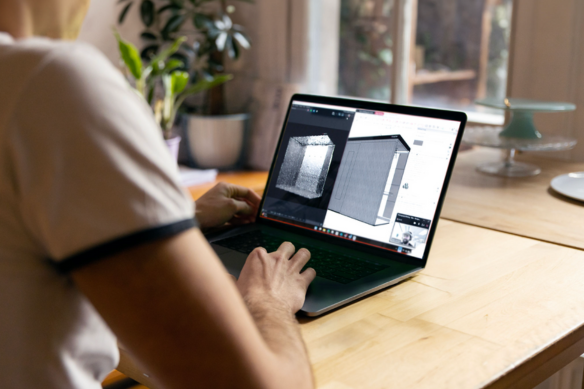
A SnapCab Design Session is a big value-add that is configured to guide clients through elevator cab interior options in a visual format.

When choosing a standard or custom interior, SnapCab’s free Design Sessions are the cornerstone of our customer experience. These one-on-one virtual consultations guide clients through every decision: from material selection to layout configuration—using dynamic rendering tools and expert insights.

Design Session Highlights:
  • Visual confirmation of finishes, lighting, and layout
  • Three-tier pricing models to align with budget expectations
  • Material comparisons for durability and aesthetics
  • Code compliance checks to avoid costly redesigns
  • Stakeholder alignment through collaborative decision-making
Visual Confirmation and Streamlined Decisions

One of the most powerful tools SnapCab offers is visual confirmation. During a free Design Session, clients can see their ideas come to life through dynamic renderings. These visualizations help stakeholders make informed decisions, reducing the risk of change orders and ensuring alignment across teams.

As a result, clients can explore multiple design tiers, each representing different price points. This tiered approach allows for flexibility and ensures that the final design fits both the aesthetic vision and the budget. Whether you’re aiming for a minimalist look or a bold statement, SnapCab helps you visualize the outcome before construction begins.

Code Compliance and Safety

Safety is non-negotiable in elevator design. SnapCab’s interiors are built to meet all relevant codes and regulations. From fire-rated materials to ADA-compliant handrails, every detail is considered. Our team works closely with elevator service companies to ensure seamless integration and approval.

Custom designs are reviewed for compliance early in the process, allowing for adjustments that maintain design integrity while meeting safety standards. This proactive approach minimizes delays and ensures a smooth installation.Sustainability and Responsible Design

SnapCab is committed to sustainability. Our materials are selected with environmental impact in mind, and our manufacturing processes prioritize efficiency and waste reduction. Which means clients can choose eco-friendly options without compromising style or durability.

Whether selecting a standard laminate or a custom resin panel, SnapCab provides transparency about sourcing and sustainability. This empowers clients to make responsible choices that align with their values and project goals.

Sustainability and Responsible Design

SnapCab is committed to sustainability. Our materials are selected with environmental impact in mind, and our manufacturing processes prioritize efficiency and waste reduction. This allows clients to choose eco-friendly options without compromising style or durability.

Whether selecting a standard laminate or a custom resin panel, SnapCab provides transparency about sourcing and sustainability. This empowers clients to make responsible choices that align with their values and project goals.

Which Elevator Interior Is Right for You?

Choosing between SnapCab’s Standard and Bostock Custom interiors depends on your project’s goals, timeline, and budget. Standard interiors offer speed, elegance, and simplicity, while Custom interiors provide unmatched personalization and design impact. Regardless of the path you choose, SnapCab’s Design Sessions ensure your elevator cab interior is engineered for success.

Craftsmanship and Legacy

With a legacy dating back to 1983, SnapCab has built a reputation for quality craftsmanship. Our team takes pride in every cab interior we produce, whether it’s a standard model or a bespoke design. Attention to detail, precision engineering, and customer satisfaction are at the heart of everything we do.

Bostock Custom, our high-end sub-brand, exemplifies this commitment. Each project is treated as a unique opportunity to showcase innovation and excellence. From concept to completion, clients receive personalized service and expert guidance.
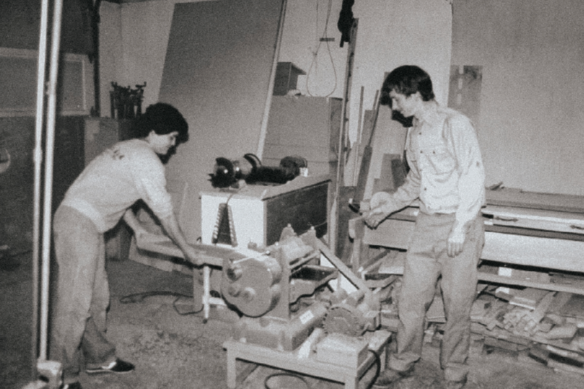
Craftsmanship since 1983 - Glenn Bostock at the Shop

Ready to Elevate Your Elevator Interior?

Schedule your free SnapCab Design Session today. Bring your inspiration, requirements, and budget — we’ll provide the rest.

Ways to Maintain Code Compliance on Each Job

Not only are SnapCab Elevator Cab interiors beautiful, they also adhere to fire codes, ASME A17.1 and are ADA compliant.

Code compliance; it’s an integral part of the design and installation processes of elevator interiors. When an interior does not meet applicable regulations, it grounds the entire project. How can you assure customers that their elevators will be installed on time and fully functional? Just use this “cheat sheet” to help you keep the project compliant.

Ways to Maintain Code Compliance on Each Job

Code compliance; it’s an integral part of the design and installation processes of elevator interiors. When an interior does not meet applicable regulations, it grounds the entire cab modernization. How can you assure customers that you can install their elevators on-time and have them fully functional? Just use this “cheat sheet” to help you keep the project compliant.

August 21, 2024

Not only are SnapCab Elevator Cab interiors beautiful, they also adhere to fire codes, ASME A17.1 and are ADA compliant.

Code Compliance: Top Red Flags To Look For

Trained elevator mechanics know what to look for and can spot red flags that can keep customers’ interiors from passing elevator safety inspections. The checklist below includes the top elevator code compliance issues you should be on the lookout for.

Adherence to Fire Codes

While some states and jurisdictions (e.g. Nevada, California, and NYC) have stricter elevator codes than others, most cities and states use ASME A17.1 Safety Code for Elevators and Escalators.

One of the requirements is that inspectors must test all combustible materials for their end-use configuration. For instance, it is not sufficient to test a piece of laminate, particle board, and adhesive individually. You must assemble and test the entire panel, as a unit, before it complies with code.

Use of Glass

Mount laminated and tempered properly to withstand required elevator tests without damage. In addition, manufacturers must mark each piece with the applicable glazing standard.

ADA Standards

Elevator interiors must comply with American with Disabilities Act requirements if the building is more than three stories tall or larger than 3,000 square feet per story.

A few of ADA’s regulations include:

  • Mounting buttons 42 inches above the floor.
  • Handrails are not required by the ADA. However, your specific jurisdiction may require them. Installers typically mount them 32 inches above the floor.
  • Cabs must be large enough to allow a wheelchair to make a 360 degree turn.

Ventilation

ASME A17.1 requires elevators to have natural ventilation that equals 3.5% of the floor area. For example, in a typical 2,500 pound-capacity elevator, that would be 142 square inches. Divide the ventilation equally between floor and ceiling (for example, a ceiling fan opening and toe kick ventilation).

Tamper-Resistant Installation

Common tools should not be able to remove the elevator panels. Ensure that any panels covering openings greater than 0.5 inches, with straight-through passages, cannot be removed from the inside of the cab.

Lighting

Elevator interiors must have at least two bulbs and passenger elevators need a minimum illumination of 50 lux, or five foot candles. Proper mounting is essential to avoid accidental breakage. Lights must be sturdy enough to go through the required elevator tests without them being damaged or jarred loose.

Weight Restrictions

When you remove the interior of an elevator, it has to weigh the same as the old interior or be within 5%. Staying within that slim margin is critical.

Music

All passenger elevators are required to play the soothing sounds of elevator music.

Okay, you got us. Elevator cabs don’t need music to be code compliant. We just wanted to make sure you were paying attention!

SnapCab Elevator Cab interiors check all the boxes to ensure customer’s projects are Code Compliant every time.

Because of these regulations, which can and do fill volumes, it’s vital that a certified elevator mechanic – not a maintenance person – completes every installation. It requires an entirely different set of skills and know-how. If the interior fails to comply with regulations, the project shuts down, and this can impact the entire building’s functionality. Not to mention the budget and timeline.

Elevator and building code compliance is complex, but non-negotiable. Partnering with an experienced interior company ensures that your customers’ elevators meet all applicable standards – which to them means completing projects safely, on-time, and on-budget. Fortunately, with the right partner, getting that compliant “elevator certificate” can be simple. If they’ll do the heavy lifting, you can get back to focusing on the rest of your project and rest assured that the final results will be up to code.

How to Accurately Order Your Elevator Interior System

Knowing how to accurately measure and order your elevator interior is essential for ensuring the customer’s project is completed on time.

Complete every detail on your order form to avoid delays. Missing information, even minor, can stall projects for weeks. Accurate measurements and proactive planning ensure timely delivery, keeping your project on track and customers satisfied.

How to Accurately Order Your Elevator Interior System

Complete every detail on your order form to avoid delays. Missing information, even minor, can stall projects for weeks. Accurate measurements and proactive planning ensure timely delivery, keeping your project on track and customers satisfied.

July 22, 2024

Knowing how to accurately measure and order your elevator interior is essential for ensuring the customer’s project is completed on time.

When filling out your order form, remember to complete every space. Omissions on the form can prevent your customers from receiving their products on time. So, even if you think your elevator interior partner doesn’t need to know your existing ceiling details or front wall information, these details are critical. Without them, a project can stall for days, or even weeks, while an additional field visit is necessary to gather the pertinent information.

A proactive approach, and a small amount of time now, ensures your customers get their elevator interiors on time and that your project can proceed as scheduled.

Measure Twice, Cut Once

Accurate measurements ensure optimal results, so it’s worth taking the time to measure twice. It’s important that your elevator interior provider knows everything about your cab. Some tips to help you get started:

  1. Always measure from the cab itself – not the drawings.
  2. Measure to the nearest 1/16th of an inch. Some manufacturers have a built-in safety margin, so if you’re slightly off, it won’t show up on the wall.
  3. For accurate wall measurements, measure from one corner to the middle and make a mark. Measure from the other corner to the mark then add those two figures.
  4. If you’re not sure how to accurately measure a feature (e.g. a radius), snap a picture and email it to your interior provider for more information. A technician will be able to walk you through it.

And remember, fill in every space! This includes transom dimensions, COP location, and more. Blank spots can delay your project and cause errors.

At SnapCab, we offer training to help better understand the surveying process for elevator interiors. This helps mechanics take accurate measurements, the foundation of a smooth ordering process.

Elevator interiors should be easy and convenient on installation day – but that’s not enough. The entire process, from start to finish, should be designed to help your team get the job done on time and on budget. The ordering process sets the tone for the entire project. Is it simple? Expedient? When it is, not only will customers be highly-satisfied with their interiors – they’ll know who to turn to for their next project.

“The videos have been extremely productive for our people. They were able to understand them and work off of them. That is rare in the elevator business. We were able to have a field person understand it without having to manage more people getting involved. I am impressed with the product and impressed with the service.”

At SnapCab, we offer training to help better understand the surveying process for elevator interiors. This helps elevator mechanics confidently take accurate measurements quickly, which is foundational for ensuring a smooth ordering process. To learn more about the Elevator Academy, sign up or watch training videos on measuring for cladding and interiors.

What Custom, Modified, and Standard Means at SnapCab

Elevators rely on balance to operate safely and efficiently. Balance is equally essential to the success of your elevator interior projects: you need to evaluate timelines and budgets – without compromising aesthetics – and deliver solutions that work. Which is the best way to do that: standard, modified, or custom interiors?

What Custom, Modified, and Standard Means at SnapCab

Elevators rely on balance to operate safely and efficiently. Balance is equally essential to the success of your elevator interior projects: you need to evaluate timelines and budgets – without compromising aesthetics – and deliver solutions that work. Which is the best way to do that: standard, modified, or custom interiors?

June 2, 2024

SnapCab: Redefining “Standard” Elevator Interiors


SnapCab’s patented system of interlocking panels work with virtually any elevator cab. You simply choose a design and the features your client wants from our comprehensive catalog. It’s that easy.

Elevator Interiors Simplified.
Benefits of opting for a standard SnapCab elevator interior model include:

Major Efficiencies

Modular systems allow for maximized yields on raw materials, streamlined production practices, and utilization of standard components. Every step of the process, from quoting and approvals, to ordering and installing, is faster – and much less expensive.

Wide Array of Design Options

Often, though, when people hear “standard,” they think “boring Z clip laminate panels.” And that can be true – of other systems. SnapCab’s interiors are designed for adaptability. A modular system starts with a standard panel configuration. The composition of the layers has a myriad of color and texture choices built in that allow for flexible design combinations.

Code Compliance without the Hassle

Standard products are end-use configuration tested. For example, wall panels consist of a surface material, substrate, and adhesive. All of these are tested as a complete assembly to ensure they comply with applicable codes. Straight out of the catalog, you can be assured that these systems meet applicable fire regulations.

Innovative Materials

Through the use of innovative materials, notably Gorilla® Glass, and Gage, standard cabs can pop with color and come alive with clarity and beauty. You can achieve exact color matches and take advantage of beautiful patterns and textures. Other materials, such as Wilsonart® Laminate, Wilsonart® Compact, and Rigidized® Metals, offer the perfect blend of form and function, helping achieve the right look and feel.

SnapCab’s standard models offer versatility, variety, and results that won’t break the budget or your schedule. Not to mention, they look great.

Need Something Else? Modified Elevator Interiors


Modified elevator interiors use existing designs and layouts as a foundation and alter them to fit the cab and the client’s needs.

Bostock Custom Cabs are here to help you with your custom interior needs. Say, for instance, that you like the Prism model, but you only want the Gorilla Glass on the back wall to save some money or it better fits your building’s design. Bostock Custom Cabs will then quote you a Modified Prism with whatever material from the catalog you want on the side walls. This is one case in which a modified interior can help you achieve your project goals.

Benefits of working with a modified elevator interior include:

Greater Flexibility

If the standard model doesn’t have quite the right look, you can alter standard catalog models to create a perfect fit. We can modify layouts, material combinations, inlay styles, and other elements to accommodate your needs. 

Cost and Time-Savings

Modifying an existing model is less expensive and requires far less lead time than undertaking a full custom job. The base for the modified interior already exists: you don’t have to wait for manufacturers or suppliers to reinvent that wheel. They just need to enhance it a bit.

Code Compliance

Because you’re not building from scratch, the modified SnapCab models will still be end-use configuration tested. This ensures they’re code-compliant when you receive them.

While a great solution for any number of projects, modified interiors do have a few drawbacks:

Increased Cost

Yes, we did just say modified interiors saved you money! And they do – compared to custom jobs. Alterations, though, may push the cost higher than a standard model. Swapping finishes or switching for a higher-end material, for instance, will likely increase the price.

Slightly Longer Processes

Again, this is compared to standard models. Catalog versions, for instance, can be quoted in minutes. For a modified interior, that can slightly extend the quoting time-frame to a day or two.

Likewise, lead times can be longer and, depending on the modifications, installation may be more time-consuming.

Starting from Scratch: Custom Cabs


Custom interiors are built from the ground up, so to speak, with each detail tailored to the exact specifications of the client. This can apply to every aspect of the interior, from panel size, material, and finishes to ceilings, inlays, and toe kicks.
Now, when most people hear “custom,” they tend to think “better!” There is certainly a cache to custom models, and the results can be stunning. The benefits of customized cabs include:

Meet Client Specifications Exactly

This enables architects and designers to create interiors that complement the rest of the building without compromising on any detail.

Unlimited Freedom

While professionals still have to work within applicable guidelines and regulations, they are not limited to specific color palettes, finishes, or material choices.

Here comes the “but.” But custom does have a number of disadvantages, including:

Lost Efficiencies

The efficiencies offered by standard is lost with custom jobs. Manufacturers essentially have to start from zero and build something they’ve never built before. This means it takes longer to do everything – from quoting to ordering to installing. As we mentioned earlier, for example, a standard cab takes a few minutes to quote, while a modified interior may take an extra day. Custom quotes can take a week or longer. And this is just one piece of the process.

Increased Cost

The lengthened processes and need to custom-manufacture each element drives the cost higher.

Mandated Testing

Custom interiors are not usually covered under the end-use configuration testing that SnapCab conducts on its standard models. This means that each assembly has to be tested to ensure that it meets applicable regulations. Failure to comply can cause costly delays.

Before you set your mind to custom, though, make sure you talk to one of our design experts to see if there is a standard or modified interior that closely meets your project’s needs. Schedule a free design session and our team can walk you through all of the various options and point you towards the perfect cab interior for your building. Often, alternative materials or methods can render a custom job unnecessary. A value-engineered solution may be able to save customers money – and save you time and headaches. 

When completing an elevator interior build or remodel, you have to weigh budgets, timelines, and aesthetic concerns and help your customer install a solution that will meet their specific needs. In most cases, standard or modified can help you find the right balance.